
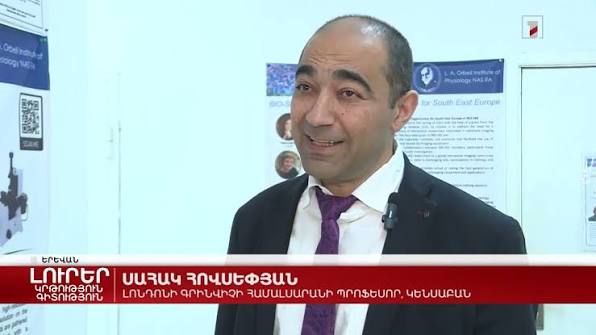
Saak Ovsepian is a name associated with modern neuroscience, neurobiology, molecular imaging, and research into neurodegenerative and neuropsychiatric diseases. As an Armenian-Irish neuroscientist and professor in biosciences, he has developed an international academic career spanning universities, research institutes, and multidisciplinary scientific programs. His work explores some of the most complicated questions in brain science, including how neurons communicate, how synapses evolved, how neurological diseases develop, and how advanced imaging techniques can improve our understanding of the brain. Saak Ovsepian has held research and academic positions in Ireland, Germany, the Czech Republic, the United States, Armenia, Georgia, and the United Kingdom. His professional profile also includes scientific publishing, editorial responsibilities, teaching, and collaboration with researchers from different fields.
Who Is Saak Ovsepian?
Saak Ovsepian, whose full name is Saak Victor Ovsepian, is an Armenian-Irish neuroscientist whose career has focused on understanding the biological mechanisms of the nervous system. He is a Professor in Biosciences at the University of Greenwich in London and has been involved in research covering neurobiology, neuropharmacology, neurophysiology, molecular imaging, neurodegeneration, and translational biosciences. His academic interests extend beyond conventional neuroscience because his work connects basic biological discoveries with potential applications in understanding and treating disease. The University of Greenwich profile associated with his career identifies him as a professor in biosciences, while Tbilisi State University lists him as a visiting professor and highlights his research interests in neurobiology, neuropharmacology, synaptic physiology, neurodegenerative diseases, imaging, molecular signaling, and the evolution of the nervous system.
Early Life and Educational Background
Information about Saak Ovsepian’s early education indicates that his academic path developed across several countries and disciplines. Sources describe him as having begun his education in Heshtia in Georgia before studying medicine at a medical college in Tyumen. He subsequently developed interests in biology, psychology, and philosophy, eventually moving to Yerevan for further study. He completed an MSc focused on biology and human physiology at Yerevan State University in 1999, building a foundation for his later specialization in neuroscience. His doctoral education continued at the Sechenov Institute of Evolutionary Physiology and Biochemistry in St. Petersburg, where his research concentrated on comparative and evolutionary physiology and the mechanisms associated with synaptic function. This combination of medical, biological, physiological, and evolutionary studies helped shape the broad scientific perspective visible throughout his later career.
Saak Ovsepian’s Early Research Career
Following his academic training, Saak Ovsepian began building a research career centered on electrophysiology, synaptic biology, and neuroscience. His early scientific experience included work at the Orbeli Institute of Physiology, where he investigated electrophysiological questions, followed by doctoral research into the evolution of presynaptic regulatory mechanisms. After completing his PhD training, he moved internationally for postdoctoral and research positions. His professional history includes work at Trinity College Dublin, Case Western Reserve University, Rutgers University, and Dublin City University. During these years, his research increasingly incorporated neuroimaging, neurotherapeutics, and experimental approaches for studying neurological processes. His profile at the Journal of Alzheimer’s Disease records research experience involving neuronal physiology, synaptic transmission and plasticity, Alzheimer’s and Parkinson’s disease, dendritic spines, ion-channel disorders, and neurotherapeutic applications.
Work in Neuroimaging and Neurotherapeutics
One important part of Saak Ovsepian’s career has been his involvement with neuroimaging. At Dublin City University, he served as a Research Fellow and Director of the Neuro Imaging Unit, according to the university’s profile. His research in this area has examined ways of visualizing biological activity in the brain and improving experimental methods for studying neural systems. He has also contributed to research involving optoacoustic imaging, an approach that can combine optical excitation with acoustic detection to produce information about biological tissues. His publications include work on optoacoustic neurotomography and the use of multispectral handheld optoacoustic imaging to visualize cortical responses. These efforts demonstrate the increasingly interdisciplinary nature of modern neuroscience, where biology, physics, imaging technology, and medicine intersect.
Research Into Synapses and Brain Function
Synapses are central to neuroscience because they allow neurons to communicate with one another and form functional networks. A substantial part of Saak Ovsepian’s research has explored synaptic physiology, transmission, plasticity, and the evolutionary origins of synaptic mechanisms. His scientific interests include the molecular structures that support communication between neurons and the ways neural signaling may have developed during evolution. He has also studied ion channels and neuronal excitability, areas that are important for understanding how electrical activity is generated and regulated in nervous tissue. For example, one of his publications examined a P/Q-type calcium-channel mutation and its effects on cerebellar Purkinje neuron excitability. Such research illustrates how changes at the molecular level can influence the electrical behavior of individual neurons and, ultimately, neural function.
The “Dark Matter of the Brain” Hypothesis
One of the concepts associated with Saak Ovsepian’s scientific work is the idea described as the “dark matter of the brain.” In a 2019 paper published in Brain Structure and Function, he proposed that a significant degree of neuronal redundancy may exist in mammalian brains, with some neurons potentially remaining in relatively dormant or low-activity states. The concept draws an analogy with “dark matter” in physics, using the term to describe biological components that may exist but remain difficult to detect through conventional observations of active neural processes. This hypothesis is part of a broader effort to reconsider how scientists understand brain organization and the relationship between active and inactive neural populations. It is important to distinguish such a scientific hypothesis from an established medical fact: ideas of this kind are proposed for investigation and debate and require continued experimental evidence.
Research on Neurodegenerative and Neuropsychiatric Diseases
Another major area of Saak Ovsepian’s research is the biology of brain diseases. His stated scientific fields include neurodegenerative and neuropsychiatric disorders, disease biomarkers, neuroimaging, synaptic physiology, and molecular mechanisms involved in neurological dysfunction. His work has addressed conditions and biological processes associated with Alzheimer’s disease, Parkinson’s disease, epilepsy, and other disorders affecting the nervous system. More recent research associated with his academic profile includes investigation of molecular biomarkers related to glial activation and injury in epilepsy. Biomarker research is especially significant because reliable biological indicators could help researchers understand disease progression, improve diagnosis, and evaluate potential treatments. Ovsepian’s work therefore sits at the intersection of basic neuroscience and translational research, where laboratory discoveries may eventually contribute to improved approaches to neurological disease.
Academic Positions and International Scientific Career
Saak Ovsepian’s professional journey is notable for its international character. He has worked at research institutions and universities in Ireland, the United States, Germany, the Czech Republic, Armenia, and the United Kingdom. His career has included research and leadership responsibilities in neuroimaging and experimental neuroscience, including work connected with Dublin City University, the German Centre for Neurodegenerative Disease, Helmholtz-related research, and the National Institute of Mental Health in the Czech Republic. From 2020, sources identify him as a professor in biosciences at the University of Greenwich. His international experience has allowed him to participate in collaborations across disciplines and countries, an important feature of contemporary biomedical research. Tbilisi State University also identifies him as a visiting professor, reflecting continued engagement with international academic institutions.
Publications, Awards, and Scientific Recognition
The breadth of Saak Ovsepian’s academic career is also reflected in his publication record and professional recognition. ResearchGate lists him as a professor in biosciences at the University of Greenwich with a substantial body of scientific publications and citations. His published work covers topics including synaptic physiology, neurodegeneration, molecular imaging, neurotherapeutics, ion channels, and brain disease biomarkers. He has also held editorial responsibilities for scientific journals and participated in peer review. Sources report that he received several research awards and recognitions, including an Innovation Fund Award and a Rolf-Becker Prize with collaborators, and that he was elected a Fellow of the Royal Society of Biology in 2022. His involvement in international research programs also includes participation in projects focused on neurodegenerative diseases and Parkinson’s disease research.
Why Saak Ovsepian’s Work Matters
The importance of Saak Ovsepian’s work can be understood through the larger challenges facing neuroscience. Disorders affecting the brain and nervous system remain difficult to diagnose and treat because the brain contains highly interconnected cellular and molecular systems. Research into synapses, ion channels, imaging, biomarkers, and neuronal activity can help scientists understand these systems at different levels. Ovsepian’s career brings together many of these research areas rather than focusing exclusively on one biological mechanism. His work demonstrates how modern neuroscience increasingly depends on collaboration between molecular biology, physiology, imaging, medicine, and technology. While not every scientific hypothesis immediately becomes an accepted explanation, proposing new ways of thinking can encourage researchers to investigate previously overlooked questions. His contributions therefore form part of the wider international effort to understand normal brain function and the mechanisms behind neurological disease.
Frequently Asked Questions About Saak Ovsepian
Who is Saak Ovsepian?
Saak Ovsepian is an Armenian-Irish neuroscientist and professor in biosciences known for research involving neurobiology, neurophysiology, molecular imaging, neurotherapeutics, synaptic biology, and neurodegenerative diseases. He has held academic and research positions at several institutions internationally.
What is Saak Ovsepian known for?
He is particularly associated with research into synaptic physiology, neurodegenerative disease, neuroimaging, molecular biomarkers, neurotherapeutics, and the evolution of neural systems. He is also known for his 2019 “dark matter of the brain” hypothesis.
Where does Saak Ovsepian work?
Saak Ovsepian is identified as a Professor in Biosciences at the University of Greenwich in London. He has also maintained international academic connections, including a visiting professorship at Tbilisi State University.
What did Saak Ovsepian study?
His educational background includes medicine, biology, human physiology, and doctoral research in comparative and evolutionary physiology. His later research became strongly focused on neuroscience and synaptic biology.
What is the dark matter of the brain hypothesis?
It is a hypothesis proposed by Ovsepian suggesting that some neurons in mammalian brains may exist in relatively dormant states and represent a form of neuronal redundancy. The concept remains a scientific hypothesis rather than an established medical fact.
Has Saak Ovsepian researched Alzheimer’s and Parkinson’s disease?
Yes. His research interests and publications include Alzheimer’s and Parkinson’s disease, along with other neurodegenerative and neurological conditions. His work has also examined biomarkers and biological mechanisms relevant to brain disease.
What is Saak Ovsepian’s connection to neuroimaging?
He has held neuroimaging research and leadership positions, including serving as Director of the Neuro Imaging Unit at Dublin City University. His research has included advanced imaging approaches such as optoacoustic techniques for investigating brain activity.
Why is his research significant?
His research connects fundamental neuroscience with translational applications. By studying synapses, neuronal signaling, imaging, biomarkers, and disease mechanisms, his work contributes to the broader scientific effort to understand brain function and neurological disorders.