
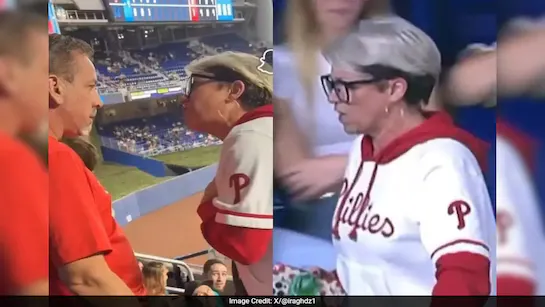
If you’re searching for cheryl richardson wagner, you’ve likely come across the massive online backlash from a September 2025 MLB game incident. Cheryl Richardson Wagner became an unwilling internet sensation when social media users mistakenly identified her as the “Phillies Karen”—the Philadelphia Phillies fan who went viral for demanding (and receiving) a home run ball from a father who had given it to his young son during a game against the Miami Marlins. The real woman in the video remains unidentified as of January 2026, but Cheryl Richardson Wagner, an innocent bystander, was forced to publicly deny involvement amid harassment and false rumors. In this detailed overview, we’ll break down the incident, the misidentification, her response, and the broader lessons on online mob justice.
The Viral “Phillies Karen” Incident: What Happened at the Game
The controversy started on September 5, 2025, during a Phillies-Marlins game at LoanDepot Park in Miami. In the fourth inning, New York Mets outfielder Harrison Bader (on the Phillies) hit a home run that landed in the stands.
A father, Drew Feltwell, caught the ball and gave it to his son Lincoln for his birthday. A nearby female Phillies fan—wearing team gear—demanded the ball back, arguing it belonged to the Phillies. After a tense exchange, the father handed it over to de-escalate.
The video exploded on social media, amassing millions of views. The woman was dubbed “Phillies Karen” for her entitled behavior, sparking outrage and calls for identification.
The boy later received compensation: a goodie bag from Marlins staff and a signed bat from Bader.
How Cheryl Richardson Wagner Became Involved: A Case of Mistaken Identity
As the video spread, internet sleuths raced to “dox” the woman. By September 6, the name “Cheryl Richardson Wagner” trended, linked to profiles of women matching a vague description.
Rumors claimed she was a 67-year-old from Moorestown, New Jersey, working in social services (e.g., at The Evergreens or Bayada Nurses), with a LinkedIn highlighting “patience and compassion”—ironically shared widely.
False stories spread: she was fired from Hammonton Public Schools (denied by the district) or affiliated with certain politics.
Multiple women named Cheryl Richardson Wagner were targeted, receiving harassment.
Cheryl Richardson Wagner’s Response: Public Denial and Humor
One Cheryl Richardson Wagner took to Facebook to set the record straight:
“Ok everyone. I’m NOT the crazy Philly Mom (but I sure would love to be as thin as she is and move as fast)… and I’m a Red Sox fan.”
She changed her cover photo to the Boston Red Sox logo, emphasized she wasn’t in Florida, and questioned if she’d get apologies.
Her post went viral, with supporters praising her witty handling of the mistake.
Other women with similar names also denied involvement.
Aftermath and Lessons from the Misidentification
The real “Phillies Karen” was never confirmed—speculation shifted to names like Leslie-Ann Kravitz, also denied.
The incident highlighted dangers of online vigilantism: innocent people harassed, false firings rumored, personal info leaked.
As of January 2026, the story has faded, but it serves as a cautionary tale about verifying info before sharing.
Final Thoughts: Empathy in the Age of Viral Outrage
The saga of cheryl richardson wagner and the “Phillies Karen” shows how quickly misinformation spreads—and how it impacts real lives. Cheryl handled it with grace and humor, turning backlash into a lighthearted defense.
In sports and online, passion runs high, but accuracy and kindness matter more. The true fan’s identity remains unknown, but the lesson endures: think before you sleuth. What’s your take on viral fan moments?